
2026 Western U.S. Commercial Real Estate Outlook: Navigating the New Equilibrium
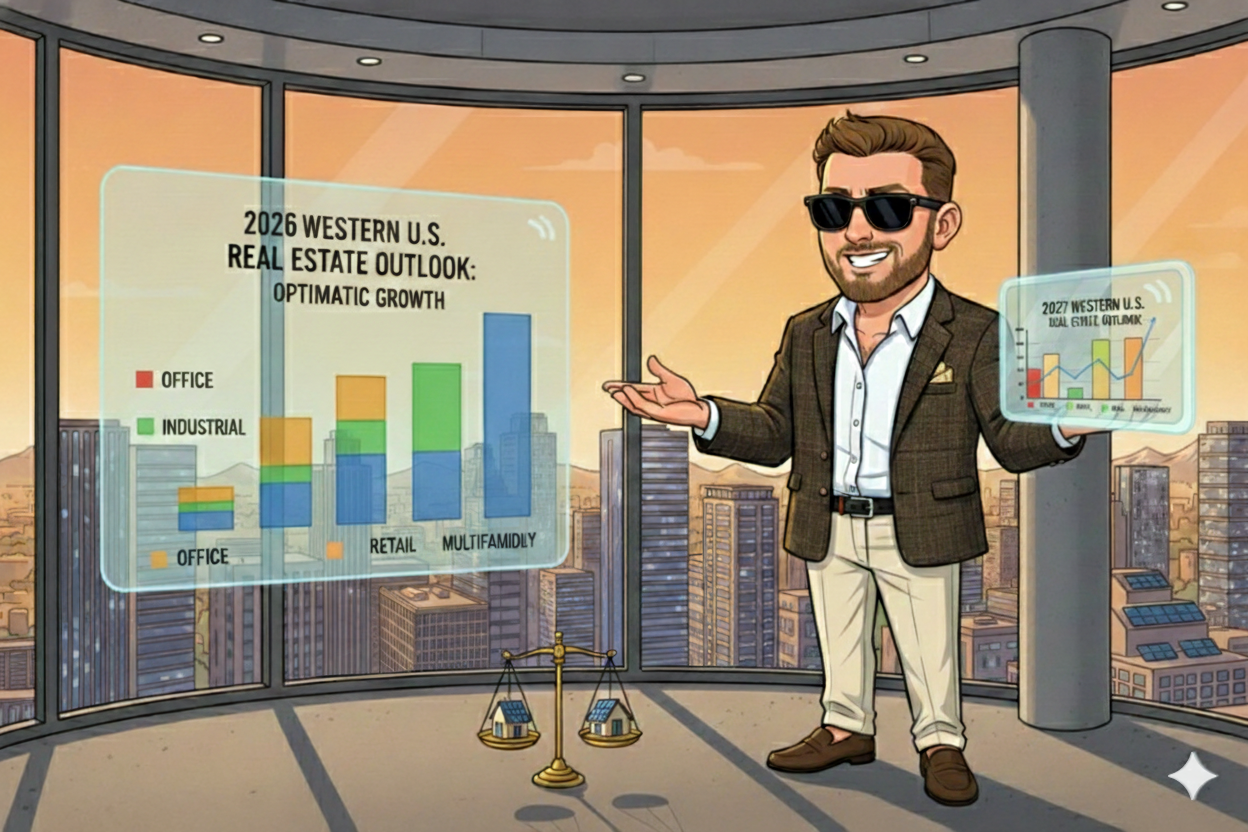
As we move through 2026, the Western U.S. commercial real estate (CRE) market is finding its footing in a "new normal." Following a period of rapid recalibration, the latest data, including the 2026 Western U.S. Market Forecast, indicates that market fundamentals are finally leveling out. From the tech hubs of the Pacific Northwest to the logistics corridors of the Southwest, sectors like office, industrial, retail, and multifamily are moving away from volatility and toward a more predictable, balanced cycle.
For stakeholders ranging from institutional investors to local tenants, success in 2026 depends on recognizing that the "recovery" isn't a monolith; it’s a collection of sector-specific evolutions.
Economic Landscape: Resilience Through Innovation
The Western market enters 2026 backed by a "steady as she goes" economic backdrop. While the frantic job growth of the early 2020s has cooled into a more sustainable pace, the economy remains bolstered by high consumer confidence and cooling inflation.
A significant driver in the West continues to be the massive capital injection into Artificial Intelligence and Next Gen Tech infrastructure. These investments are acting as an economic floor, providing stability and encouraging long term capital deployment even as traditional lending remains disciplined.
Sector by Sector Breakdown
Office: The Flight to Quality Continues
The office sector is no longer in a freefall; instead, it is undergoing a structural "thinning of the herd."
Selective Rebound: High-tier "trophy" assets in prime urban cores are seeing a resurgence in leasing activity.
Supply Correction: A significant halt in new office starts over the last few years has finally allowed existing inventory to be absorbed.
The Class Divide: While Class A properties thrive on "return to office" mandates, older Class B and C assets face pressure to either innovate or undergo adaptive reuse, such as residential conversions.
Industrial: The Era of "Just in Case" Logistics
After the post pandemic "gold rush," the industrial market has matured into a balanced, healthy state.
Data Center Dominance: Demand for AI ready data centers is offsetting any minor cooling in traditional e-commerce warehousing.
Tightening Vacancy: As the construction pipeline clears, vacancy rates are beginning to compress again.
Strategic Hubs: Locations near major Western ports and inland distribution hubs remain the "darling" of institutional portfolios due to consistent rent growth.
Retail: Suburban Strength & Necessity
Retail has proven to be the "dark horse" of 2026, showing remarkable durability.
Neighborhood Focus: Grocery-anchored centers and "service retail" (clinics, gyms, cafes) are seeing record low vacancies.
Limited Supply: Virtually no new retail footprint has been added in recent years, giving landlords significant pricing power.
Consumer Behavior: Foot traffic has stabilized as hybrid workers spend more time and money near their suburban homes.
Multifamily: High Demand Meets Moderating Supply
The residential rental market remains a cornerstone of Western CRE stability.
Renter by Necessity: High mortgage rates continue to keep would-be buyers in the rental pool, sustaining high occupancy levels.
Equilibrium: The wave of "new builds" that hit the market in 2024 2025 has been largely absorbed, easing fears of oversupply.
Regional Winners: Mountain West cities and secondary California markets are seeing particularly robust rental demand.
Strategic Takeaways for 2026
Stability is the Theme: The wild swings of the early 2020s are over. 2026 is about incremental gains and predictable yields.
Adaptive Strategies Win: Whether it’s turning an old mall into a medical suite or a warehouse into a data center, flexibility is the highest value currency.
Location Matters More Than Ever: The "West" is not a single market. Localized demand driven by tech proximity or population migration will dictate performance.
The 2026 forecast for the Western U.S. reflects a market that has matured. While challenges remain, particularly in financing costs and aging office stock, the underlying demand for high-quality, functional space remains intense. For those with a long-term horizon, 2026 offers a rare window of "predictable opportunity."