

The Phoenix housing landscape underwent a visible transformation as 2026 kicked off. After years of relentless heat, the market is finally showing signs of a "cool down," with January data revealing a significant dip in activity and a long-awaited easing of home prices. This shift marks a pivotal move toward a rebalanced market—offering a different set of rules for buyers and sellers in the Valley of the Sun.
By the Numbers: The January Slowdown
The start of the year typically sets the tone for the spring season, and 2026 is signaling a more cautious pace:
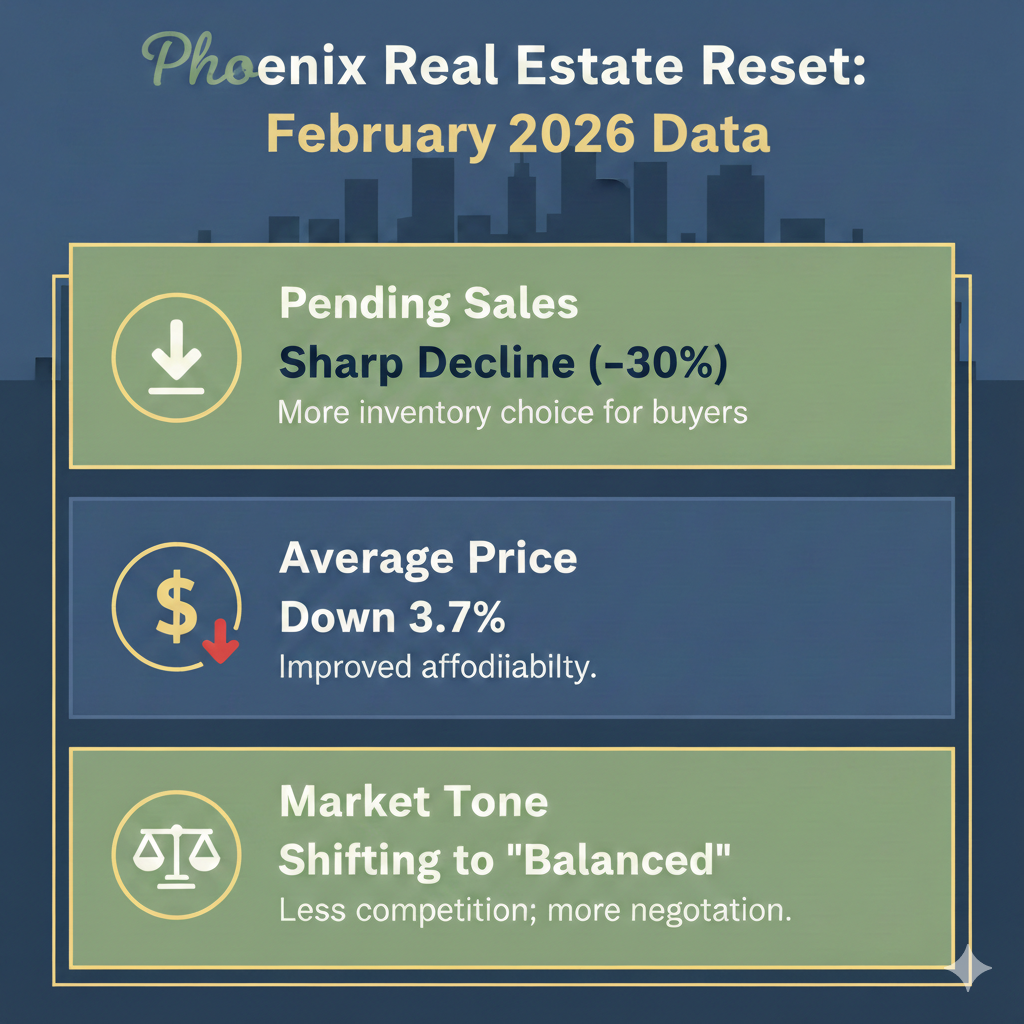
Pending Sales Plunge: Contract activity saw a dramatic retreat, falling more than 30% compared to January 2025.
Inventory Tightness: New listings haven't flooded the market; in fact, they’ve dipped slightly, suggesting sellers are also taking a "wait and see" approach.
Steady Closings: Despite the drop in new contracts, closed sales held firm, showing only a marginal increase year-over-year.
These metrics point to a market where the "frenzy" has been replaced by a more deliberate, calculated environment.
Price Moderation and the Affordability Factor
For the first time in a while, the price ceiling is softening. Average home values in Phoenix are down roughly 3.7% from this time last year. While homes are still expensive by historical standards, this downward trend represents a vital correction.
This "price loosening" is the breathing room many residents have been waiting for. With bidding wars becoming the exception rather than the rule, the path to homeownership in Arizona is looking a little less steep.
The Buyer’s Playbook: Reclaiming the Upper Hand
If you were sidelined during the hyper-competitive years, the 2026 environment is working in your favor:
More Time, Less Stress: You no longer need to make an offer within hours of a tour. You have the luxury of comparison.
Leverage is Back: Longer "days on market" means sellers are more open to concessions, repairs, and price negotiations.
Financial Stability: With prices stabilizing and mortgage rates finding a more predictable rhythm, your monthly payment calculations are less likely to be a moving target.
The Seller’s Reality: Precision is Paramount
The days of "list it and they will come" are largely over. In a balanced market, your strategy must be sharp:
Data-Driven Pricing: Buyers are savvy and won't overpay. Getting the price right on day one is the difference between a quick sale and a stale listing.
The "Wow" Factor: Since there is less urgency, buyers are pickier. High-end staging and professional marketing are now requirements, not options.
Flexibility Wins: Being open to contingencies or minor repairs can help close a deal in a market where buyers have more choices.
Investing in the Valley: Long-Term Outlook
For investors, the January dip isn't a sign of weakness, but a phase of normalization. Phoenix continues to boast strong population growth and a robust job market.
Rentals: Demand for quality rentals remains high as the city expands.
Value-Add: With prices easing, there is a renewed opportunity to find "fix-and-flip" or "buy-and-hold" properties that make sense mathematically.
Summary of the 2026 Shift
Looking Ahead
The Phoenix market in 2026 is less about "winning" a house and more about making a sound investment. As supply levels and buyer demand find their new equilibrium, staying updated on hyper-local neighborhood trends will be the most effective way to navigate the Valley's evolving real estate story.