
How to Negotiate a Home Purchase in Phoenix: The Ultimate Guide
Tips for Negotiating a Home Purchase in Phoenix
When buying a home in Phoenix, negotiation is one of the most important parts of the process. A strong negotiation strategy can save thousands of dollars, improve contract terms, and even make or break whether you get the home you want.
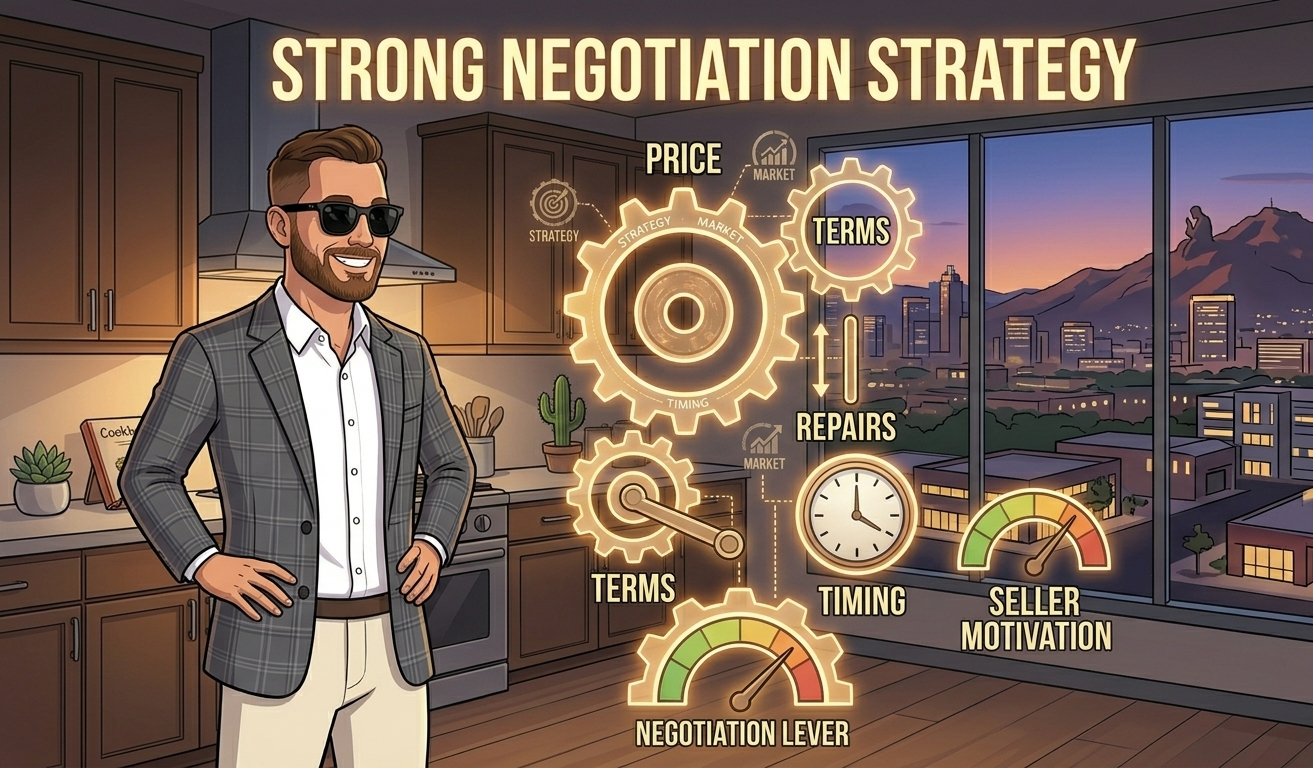
The key is understanding that negotiation is not just about price. It is about timing, strategy, market conditions, and how well you understand the seller’s position.
Why Negotiation Matters in Real Estate
Most buyers assume the listing price is the starting point. In reality, every home has different levels of flexibility depending on:
Days on market
Seller motivation
Condition of the property
Competing offers
This is why having a strong strategy is just as important as finding the right property in the first place.
A Real Example of a Successful Negotiation
One of the strongest negotiation outcomes involved a property that had previously failed to sell after 152 days on the market due to an unrealistic price point.
After relisting it slightly below the original price, we secured a full list price offer in a very tight market. On top of that, we successfully negotiated an as-is purchase agreement, even though the home had an active roof leak at the time.
The result was a record-setting sale for the neighborhood and a win for both sides, proving that strategic positioning can completely change an outcome.
Common Mistakes Buyers Make During Negotiations
One of the biggest mistakes buyers make is going against professional guidance during negotiations.
In many cases, buyers rely too heavily on personal opinion instead of leveraging market expertise. This can lead to:
Overpaying for a property
Missing out on strong homes
Weak contract terms
Long-term regret after closing
In real estate, negotiation is not just about what feels right. It is about understanding market behavior and using data-driven strategy to support decisions.
Strategies That Help Buyers Negotiate Better Deals
One of the most effective strategies in real estate negotiation is creating a sense of urgency.
This can be achieved through timing, presentation, and understanding buyer competition. When a seller feels strong interest from multiple angles, it can shift pricing flexibility and improve contract terms for both sides.
Other effective strategies include:
Strong initial offer positioning
Strategic use of inspection periods
Leveraging repair requests correctly
Understanding seller motivation early
Each of these tools helps create leverage in the negotiation process without overextending the buyer.
How Market Conditions Affect Negotiation Power
Market conditions play a major role in how negotiations unfold.
In a buyer’s market, buyers typically have more leverage, which can lead to:
Price reductions
Seller concessions
Repair credits
More flexible contract terms
In a seller’s market, competition often reduces negotiation flexibility and can lead to buyers overpaying if they are not careful.
This is why understanding broader housing conditions is critical before making an offer, especially when evaluating timing and strategy in different parts of Phoenix.
When the Right Strategy Makes the Difference
The best negotiation outcomes happen when timing, strategy, and market understanding all align.
Real estate is not just about finding the right home. It is about knowing when and how to act in order to secure the best possible terms while protecting long-term value.
Bringing It All Together
Negotiating the best deal on a home requires more than just making an offer. It requires strategy, market awareness, and the ability to adapt based on conditions in real time.
When done correctly, negotiation can create significant financial advantages and improve the overall buying experience.
If you are thinking about buying a home in Phoenix and want help negotiating the strongest possible deal, I would be happy to guide you. Call (480) 482-7031 to get started.