
Office Market Recovery in Phoenix: What It Means for the 2026 Housing Market
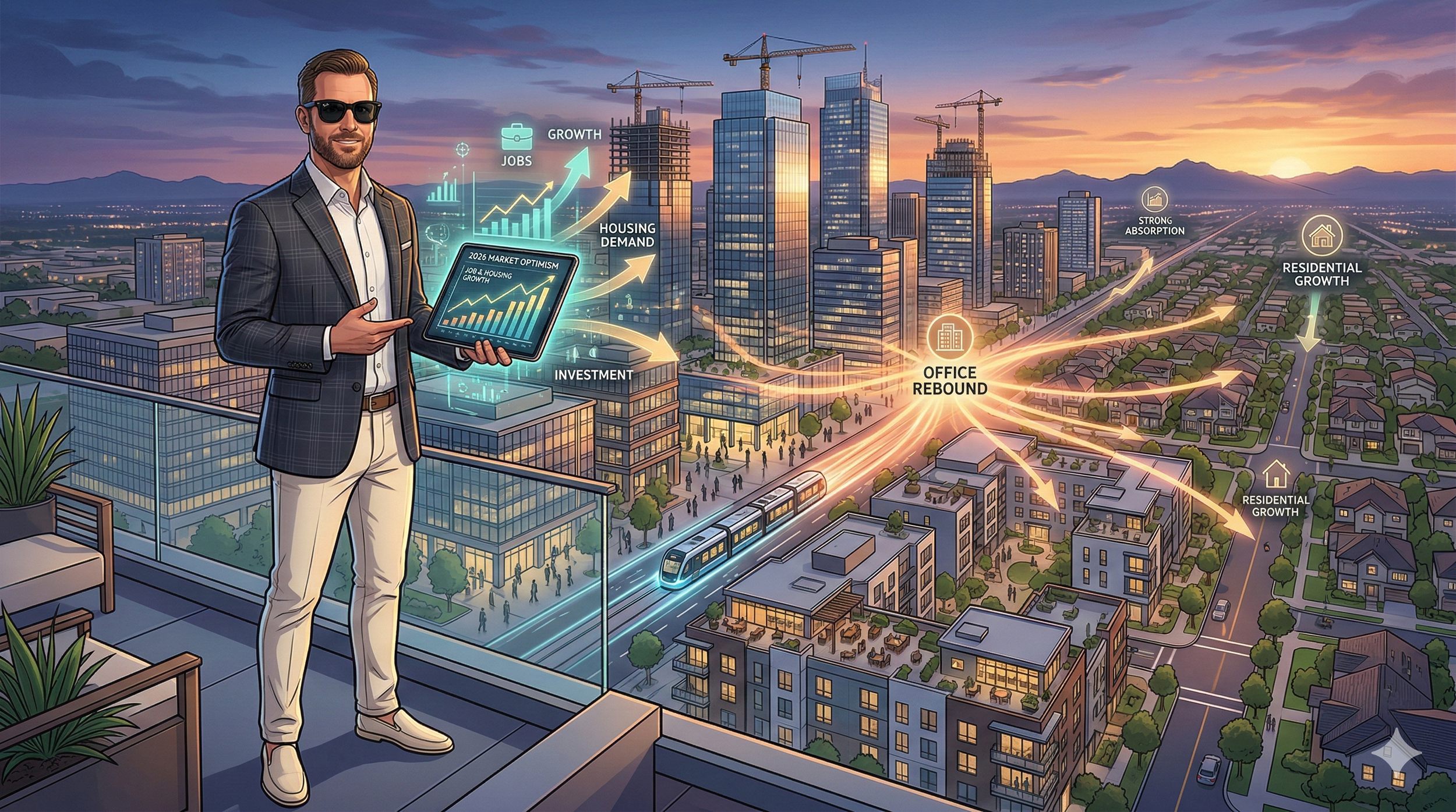
Phoenix’s commercial real estate sector is beginning to regain momentum — particularly within the office market. After several years of slowdown and uncertainty, new data shows that office construction is increasing and sale prices are starting to recover.
While this may sound like strictly commercial news, it has meaningful implications for Phoenix’s residential real estate market, including job growth, neighborhood stability, and long-term home values.
Office Prices Show Signs of Stabilization
Following years of declining valuations and limited development, the office sector is beginning to turn a corner:
Average office sale prices increased approximately 6.1% in 2025, marking the first annual gain since 2021.
This rebound signals renewed investor confidence in commercial properties after a prolonged correction.
Although prices remain below 2019 peaks, the recent uptick suggests the market may have moved past its lowest point.
Office construction starts are also rising, even if overall development remains moderate compared to previous cycles.
These improvements point to gradual stabilization rather than rapid expansion — a healthy sign for long-term sustainability.
Why Office Trends Matter to Homebuyers and Sellers
It’s fair to ask: How do office buildings impact the housing market? The connection is stronger than it may seem.
1. Office Growth Supports Employment and Income
An improving office sector often reflects business expansion in industries such as technology, finance, healthcare administration, and corporate services. When companies grow locally, it can lead to:
Increased demand for homes near employment hubs
Greater interest in neighborhoods with manageable commute times
Higher earning potential that supports mortgage qualification
Stronger employment growth typically fuels housing demand, helping stabilize and support home values across the metro.
2. Construction Activity Reflects Economic Confidence
Even modest growth in office construction can indicate broader confidence in the local economy. Developers tend to build when they anticipate sustained demand and long-term growth.
For Phoenix homeowners and buyers, that can translate to:
Expanded infrastructure and amenities
Revitalization of mixed-use districts
Continued job creation that attracts new residents
A steady pipeline of commercial projects often complements residential development.
3. Stronger Office Hubs Can Elevate Nearby Home Values
Residential areas located near active commercial centers often benefit from:
Convenient job access
Reduced commute times
Increased retail, dining, and entertainment options
Submarkets such as Downtown Phoenix, Tempe, and Scottsdale — where commercial investment is gradually strengthening — may experience long-term housing demand tied to office recovery and mixed-use growth.
Looking Ahead: A More Balanced 2026 Market
While the office recovery remains in early stages, rising sale prices and increased construction starts suggest improving fundamentals. Even in an era of remote and hybrid work, companies are prioritizing high-quality office environments in desirable locations.
For the residential market, this means:
Job growth that supports homebuyer activity
Emerging mixed-use developments that create attractive live-work environments
Strengthened investor confidence that enhances neighborhood vibrancy
A stabilizing office sector can help reinforce Phoenix’s broader economic foundation — and that stability often carries over into housing demand and long-term property values.
The recent uptick in office prices and construction reflects cautious but meaningful momentum in Phoenix’s commercial real estate market. While recovery is gradual, its ripple effects — from employment growth to neighborhood revitalization — can positively influence residential real estate.
For homebuyers, sellers, and investors in Phoenix, monitoring office market trends isn’t just commercial news — it’s a window into the health and direction of the broader housing market in 2026 and beyond.